
CNC Knife Cutting Systems
CNC knife cutting systems provide manufacturers with a flexible and highly accurate method of cutting components directly from digital designs. Unlike traditional die cutting, which requires a physical cutting die for each component, CNC knife cutting uses computer-controlled cutting tools to follow a programmed shape or pattern. This makes the technology particularly valuable for manufacturers producing complex components, shorter production runs or frequently changing designs.
At Cutting Systems UK, we supply industrial CNC knife cutting systems for a wide range of manufacturing applications. Our experienced engineering team can help identify the right cutting solution based on your materials, component designs, production volumes and manufacturing requirements.
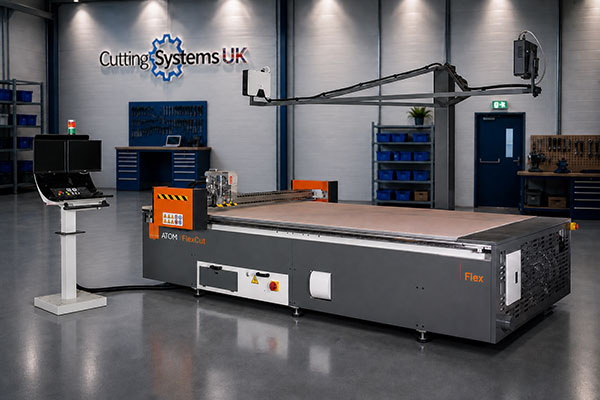
What Is a CNC Knife Cutting System?
A CNC knife cutting system is a computer-controlled cutting machine that uses one or more cutting tools to accurately cut components from sheet or roll materials. A digital design tells the machine exactly where the cutting tool needs to travel, allowing complex shapes to be produced accurately and repeatedly.
Because the cutting pattern exists digitally, manufacturers can change from one component to another without having to manufacture and store a separate physical cutting die. This provides considerably more flexibility when producing prototypes, customised products, small batches or a large number of different component designs.
How Does CNC Knife Cutting Work?
The material is positioned on the machine’s cutting surface and the required component designs are loaded into the cutting system. Software can then arrange the components across the available material before the cutting head follows the programmed paths to produce the finished parts.
Depending on the application and material being processed, different cutting tools and techniques can be used. The fundamental principle remains the same: the machine converts a digital design into an accurately cut physical component.
Modern CNC cutting software can also help arrange multiple components efficiently across the available material. This process, often referred to as nesting, can significantly improve material utilisation and reduce the amount of waste generated during production.
Why Choose CNC Knife Cutting?
One of the biggest advantages of CNC knife cutting is flexibility. With no requirement to manufacture a physical die for every component, new designs can be introduced quickly and existing designs can be changed without replacing cutting tooling.
This makes CNC knife cutting particularly attractive to manufacturers producing a varied range of products or businesses where designs and production requirements regularly change.
- No physical cutting die required for each component.
- Accurate and repeatable cutting.
- Quick changeover between different component designs.
- Ideal for prototypes, short runs and varied production.
- Efficient nesting can improve material utilisation.
- Reduced material waste.
- Complex shapes can be produced directly from digital designs.
What Materials Can CNC Knife Cutting Systems Process?
CNC knife cutting systems can process a very broad range of flexible and semi-rigid materials. Depending on the machine and cutting technology selected, applications can include leather, textiles, technical fabrics, foam, rubber, gasket materials, composites, insulation products, packaging materials and many other specialist industrial materials.
This versatility means CNC knife cutting technology is used across industries including automotive manufacturing, aerospace, footwear, leather goods, upholstery, packaging, technical textiles, composites and specialist component production.
CNC Knife Cutting or Die Cutting?
Neither cutting method is automatically better than the other. The right choice depends upon what you’re manufacturing and how you’re producing it.
Traditional die cutting can be extremely efficient when producing large quantities of established components repeatedly. CNC knife cutting offers greater flexibility where component designs change frequently, production quantities vary or the cost and storage of numerous physical cutting dies would be undesirable.
Some manufacturers use both technologies, selecting the most efficient cutting method for each particular product or production run.
Choosing the Right CNC Knife Cutting System
The most appropriate system depends on factors including the materials being processed, material dimensions, component complexity, required production volumes and the level of automation needed within your manufacturing operation.
Machine size is only one consideration. Cutting technology, material handling, software and workflow all need to work together, which is why discussing the complete manufacturing process with an experienced engineer is valuable before selecting a system.
ATOM CNC Knife Cutting Systems
Cutting Systems UK supplies ATOM CNC knife cutting systems, including machines from the FlashCut range. ATOM produces cutting systems for a broad range of flexible and semi-rigid materials, with different machine sizes and configurations available to suit applications ranging from specialist production through to demanding industrial manufacturing.
The wide choice of ATOM cutting systems allows our engineering team to recommend a solution based around the customer’s actual materials and production requirements rather than simply selecting a machine from a specification sheet.
Explore our ATOM Knife Cutting Tables to learn more about the CNC cutting systems available through Cutting Systems UK.
Speak to Cutting Systems UK
If you’re considering CNC knife cutting but aren’t sure which machine, cutting technology or configuration is right for your application, speak to our engineering team. We’ll take the time to understand your materials, products and existing manufacturing process before recommending an appropriate solution.
Contact Cutting Systems UK today for practical advice on CNC knife cutting systems and help identifying the right cutting technology for your manufacturing requirements.