
Industrial Laminating Systems
Industrial laminating systems are used to bond two or more materials together to create a combined product with the required strength, appearance or performance characteristics. Used across a wide range of manufacturing sectors, lamination allows materials such as foams, textiles, films and other flexible products to be combined efficiently and consistently as part of a controlled production process.
At Cutting Systems UK, we supply industrial laminating systems for manufacturers processing a broad range of materials and finished products. Our experienced engineering team can help identify the right solution based on the materials being laminated, the bonding process required and your production volumes.
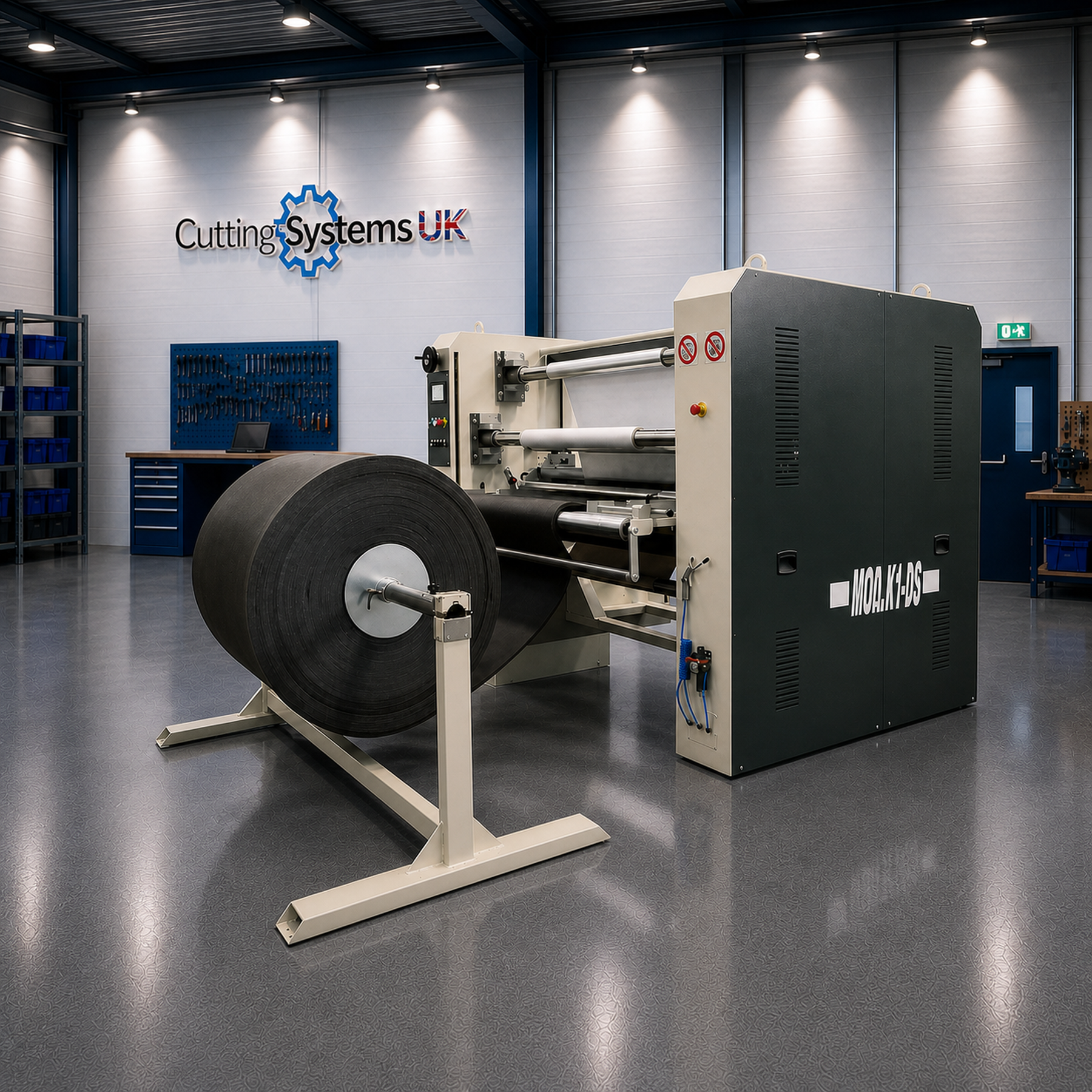
What Is Industrial Lamination?
Lamination is the process of joining separate layers of material to create a single combined product. Each layer may provide a different property, allowing manufacturers to create materials with characteristics that would be difficult to achieve using a single material alone.
For example, a foam layer might be bonded to a textile, a film applied to another flexible material, or several layers combined to create a specialist product for a particular manufacturing application.
Industrial laminating machinery allows this process to be carried out accurately and repeatedly, helping manufacturers maintain consistent bonding and finished-product quality across production runs.
How Do Laminating Systems Work?
The exact process depends on the materials and bonding method being used, but the principle is relatively straightforward. The materials are brought together in a controlled manner and passed through the laminating system, where pressure and the chosen bonding method combine the layers.
Depending on the application, manufacturers may use pressure-sensitive, transfer or thermally activated adhesives. Material may be supplied from rolls, sheets or a combination of both, with different machine configurations available to accommodate different production methods.
Controlling the way the materials are fed, aligned and bonded is important. An appropriate laminating system helps maintain consistency throughout production while reducing problems such as poor alignment, uneven bonding or unnecessary material waste.
Why Use an Industrial Laminating System?
For manufacturers producing laminated materials regularly, purpose-designed machinery can provide significant advantages over more manual production methods. Automation allows materials to be handled consistently while helping maintain the required quality throughout longer production runs.
- Consistent bonding across finished materials.
- Improved production efficiency.
- Accurate handling and alignment of materials.
- Suitable for a wide variety of flexible materials.
- Reduced reliance on manual processing.
- Repeatable results across production runs.
- Options for both roll-fed and sheet materials.
What Materials Can Be Laminated?
Industrial laminating systems can be used with an extensive range of materials. Typical applications can include foams, textiles, technical fabrics, films, insulation materials and other flexible or semi-rigid products.
The technology is used across sectors including automotive manufacturing, footwear, upholstery, technical textiles, insulation, packaging and specialist industrial manufacturing.
The suitability of a particular laminating system depends not only on the material itself, but also its thickness, dimensions, surface characteristics, bonding method and the requirements of the finished product.
Roll-to-Roll and Sheet Laminating
One of the fundamental considerations when choosing a laminating system is how the materials are presented to the machine. Roll-fed systems allow continuous materials to be laminated efficiently and are particularly suitable for higher-volume production.
Flatbed and sheet laminating systems provide an alternative where materials are supplied as individual sheets or where the characteristics of the product make continuous roll processing unsuitable.
Neither approach is universally better. The right solution depends on the materials, finished product and overall manufacturing process.
Choosing the Right Laminating System
s width of material that needs to be processed. The materials being combined, adhesive technology, production speed, material handling requirements and processes before and after lamination all need to be considered.
In some manufacturing environments, lamination may also form part of a wider converting process involving operations such as slitting, cutting or sheeting. Looking at the complete production workflow can therefore help identify opportunities to improve efficiency beyond the laminating process itself.
Imesa Laminating Systems
Cutting Systems UK supplies Imesa laminating machines for a wide variety of industrial applications. The Imesa range includes solutions for both roll-fed and sheet materials, with different machines and configurations available to suit everything from relatively straightforward laminating requirements through to more demanding production environments.
This flexibility allows our engineering team to recommend a laminating system based around the customer’s materials and manufacturing process rather than simply selecting machinery from a specification sheet.
Explore our Imesa Laminating Machines to learn more about the laminating systems available through Cutting Systems UK.
Speak to Cutting Systems UK
If you’re considering investing in an industrial laminating system but aren’t certain which machine or configuration is right for your application, speak to our engineering team. We’ll discuss the materials you’re working with, how they need to be bonded and your wider production process before recommending an appropriate solution.
Contact Cutting Systems UK today for practical advice on industrial laminating systems and help identifying the right machinery for your manufacturing requirements.